Microcultural
Revolution
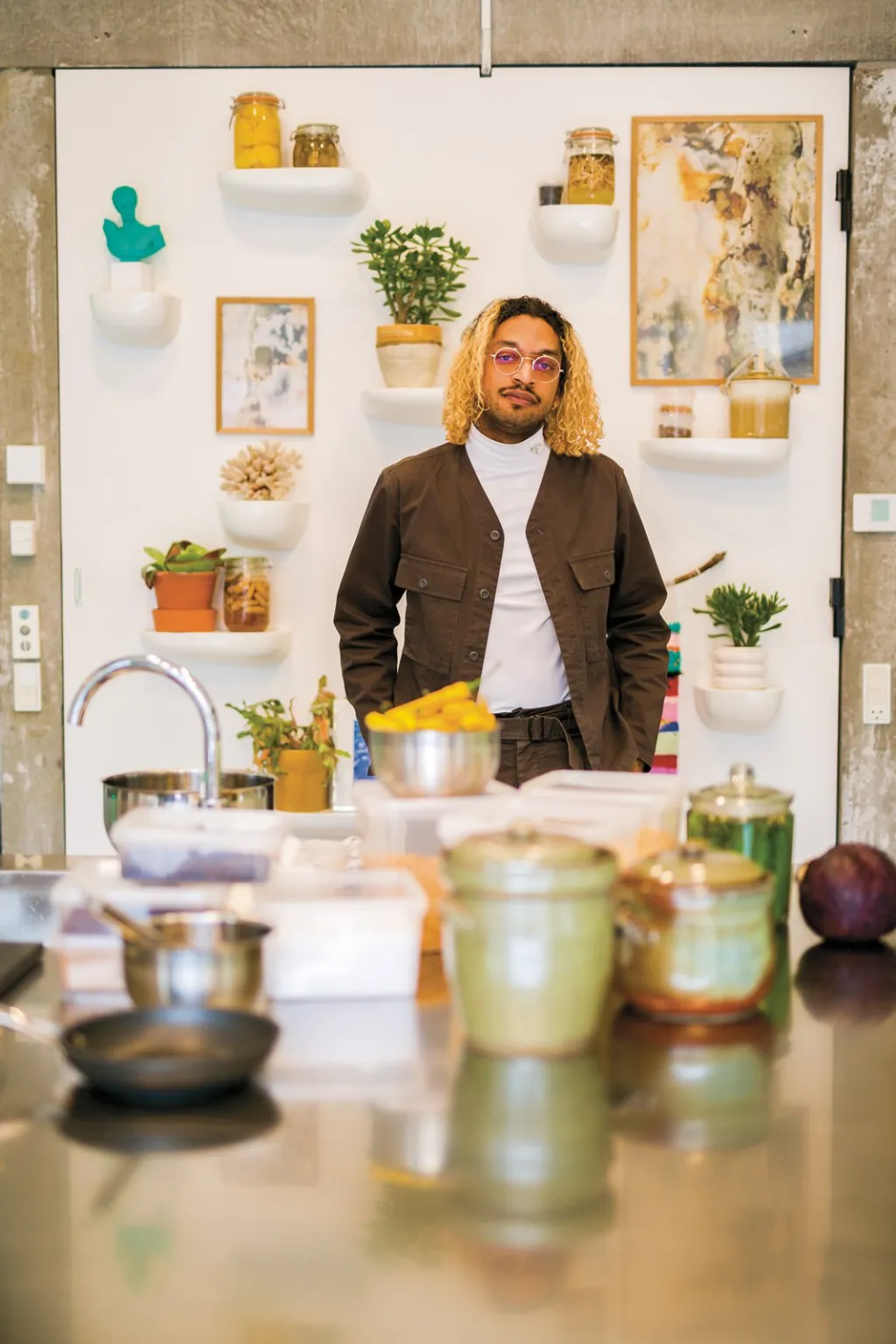
Jo: What is your relationship with microbes?
David: There isn’t a human being on Earth that isn’t in a deeply enmeshed and utterly intractable relationship with microbes. We are absolutely dependent on them. We are evolved from them. They are the ground floor for life.
If you look at the diversity of bacteria or of yeast - or protozoa, or amoebas - it dwarfs the diversity of the animal and plant world. Anything that we can see with our eyes is a fraction of the complexity of microbial evolution. They live on and in me. I’m dependent on them for normal digestion. My gastrointestinal tract, the health of my skin, all of it is dependent on microbes that use me as an environment. Organisms are more than just environments to each other. Organisms are entire worlds.
Everything from the pets in your house to a tree in a forest, they’re all dependent on microbes to function. And there’s this endless interchange of metabolic and bioinformational communication that mediates our world.
To engage with a microbe beyond, say, catching a cold or getting an ear infection, to actually understand what they need and how they work and their rhythms and their cycles - I see fermentation as an extraordinarily powerful tool to be able to foster relationships with microbes in which you understand their needs and their wants.
I don’t mean to anthropomorphise these creatures that are really, in so many ways, at once the most complex things imaginable but at the same time the simplest forms of life. But ultimately, what you do when you interface with microbes through fermentation, by working with them, by coaxing out the products of their metabolisms, you’re really interfacing with the rhythms of life itself.
Fermentation has definitely changed how I live in and view the world. The funny thing is going through it with them, learning about microbes so intimately, is a kind of ratchet. There’s no going back. Once you’ve seen the world from their perspective, you can’t unsee it, and everything forever onwards is filtered through a microbial view of life.
This article is for
digital access members only.
Buy digital access to view all of our issues online for £30.

No subscription required, just a one-off fee of £30.
Explore Related Pieces
-
 Interviews
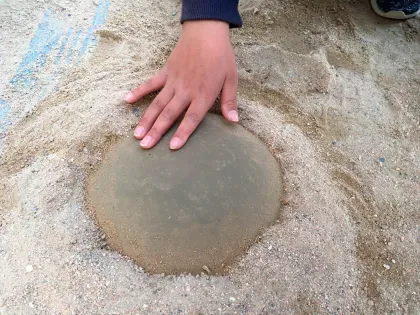
Hikaru Dorodango
Naoto Kanesaka is the director of the Children’s Centre in Kobe City, in Japan’s Hyōgo Prefecture. When studying early years education at university he discovered dorodango, the process of...
— Issue #1 -
 Interviews
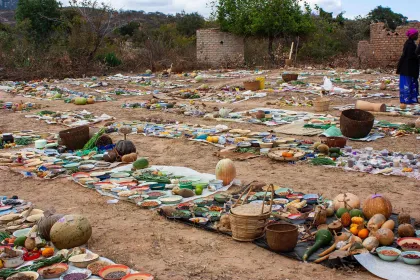
EarthLore
The EarthLore Foundation focuses on helping small farming communities in Zimbabwe and South Africa to revive their traditional farming methods.
— Issue #2 -
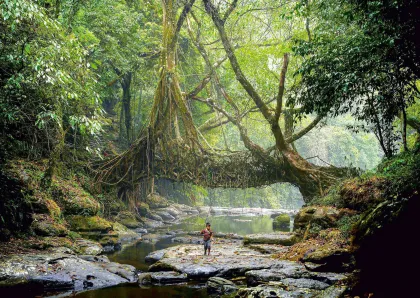 Interviews
Lo-TEK
Designer and author Julia Watson coined the term Lo-TEK to describe Indigenous technologies that she believes can be adopted more widely to mitigate climate change and build a resilient future.
— Issue #3 -
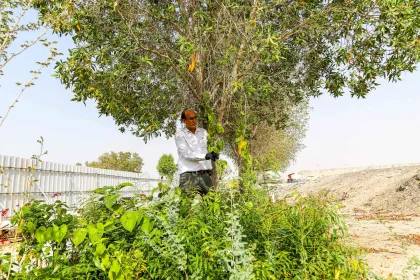 Interviews
Finding God in Nature
Rajender Kumar Bishnoi lives in Dubai, a long way from Rajasthan where he grew up. But he takes the spirit of the Bishnoi community, and the teachings of Shree Guru Jambeshwar, with him.
— Issue #4 -
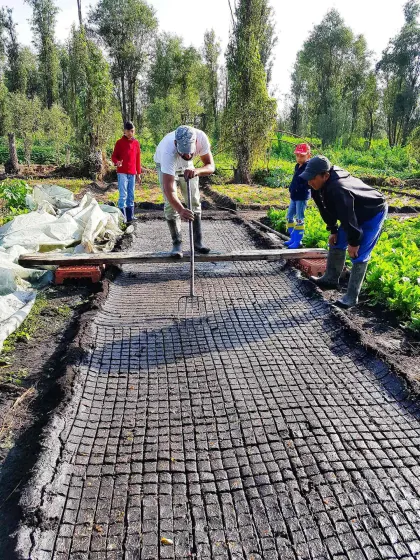 Interviews
Resetting Global Food Systems
As global food systems and supply chains have been disrupted by Covid-19, Francis Mwanza, researcher and writer on African and local foods, and former head of office of the United Nations World...
— Issue #4